Discover where, how and by whom AI is being used across European Science
RAISE Observatory launches to help Europe explore AI in Science
Discover where, how and by whom AI is being used across European Science

Discover where, how and by whom AI is being used across European Science
Where is AI being used in science, how is its use evolving, and which organisations are involved? The RAISE Observatory, piloted by the SCIANCE project and powered by the OpenAIRE Graph, brings research evidence and ecosystem information together to help researchers, institutions and policymakers explore these questions.
As part of the RAISE digital ecosystem, the Observatory offers a discovery and analytics service for understanding AI-enabled research across Europe, with international evidence providing a wider context.
RAISE—Resource for AI Science in Europe—is the European Commission’s initiative to establish a virtual research institute connecting computational resources, data, talent and research funding. Introduced through the European Strategy for AI in Science, it aims to strengthen European research both on AI and through its scientific applications.
SCIANCE supports RAISE’s development through a community-driven approach, bringing together scientific organisations, AI research centres and research infrastructures. It helps identify research and innovation priorities and pilots the structure of the RAISE Secretariat for AI in science. The Observatory contributes to this work by making the research landscape more visible and easier to explore.
Within this ecosystem, the RAISE Hub provides a gateway to information and resources, the RAISE Forum supports community exchange, and the RAISE Observatory supplies evidence for discovery and strategic analysis.
The Observatory builds on the OpenAIRE Graph, an open scholarly knowledge graph connecting publications, datasets, software and other research outputs with projects, organisations and funding information. These connections provide context for understanding research activity beyond individual publications.
OpenAIRE’s contribution provides the Observatory’s underlying research information foundation, complemented by an inference system credited to OPIX. Together, these support the identification and classification of AI-related research and its presentation through accessible analytical views.
The Observatory brings together several complementary capabilities:
These capabilities help users connect an overview of AI in science with practical questions about potential collaborators, research support and institutional priorities.
Imagine you are a researcher preparing a project that applies AI to environmental research. You want to understand relevant approaches, explore activity in your field and identify organisations to investigate as potential partners. The Observatory offers a starting point for mapping that landscape and finding relevant initiatives.
Now imagine you work in a university research office. Your institution is planning support for AI-enabled research. Exploring patterns across fields and research workflows could help you frame discussions about training, partnerships and support services.
For funders and policymakers, the same evidence can inform questions about the distribution of activity, emerging areas and where further investigation or consultation is needed.
By building on open research information and making its methodology visible, the Observatory supports transparent exploration of AI in science. Its indicators provide evidence to investigate alongside disciplinary expertise and community perspectives.
The launch also creates a route from discovery to discussion: users can explore the Observatory, consult the RAISE Hub and bring questions and experiences to the RAISE Forum.
Discover where, how and by whom AI is being used across European Science
A new online platform to connect researchers, infrastructures, and funders to accelerate AI scientific discovery across Europe
As part of the upcoming RAISE Hub rollout, the RAISE Forum will officially launch on Thursday, October 15, at AIS26.
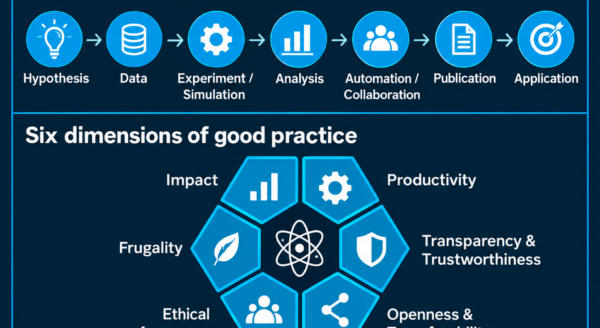
SCIANCE is launching the Registry of Good Practices in AI-enabled Science, which is a growing collection of practical examples demonstrating the effective and responsible use of AI across different scientific disciplines and research settings. The Registry is designed to capture the practical experience of the research community and identify lessons that can be shared across fields.

SCIANCE session at AIS26
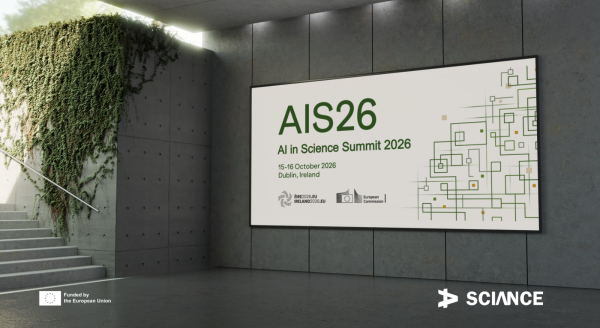
On 15 and 16 October 2026, the AI in Science Summit 2026 (AIS26), organised by the European Commission and the Irish Presidency of the Council, will take place in Dublin, Ireland.

In July 2026, SCIANCE is featured in the ERCIM News special theme issue ‘E-values: Statistical Testing for the 21st Century’

SCIANCE has concluded its call for experts for the AI in Science Working Groups (AISWG). Out of 665 applicants, 150 experts were selected.

The SCIANCE consortium has been positively evaluated and invited to enter Horizon Europe grant preparation, with Commissioner Ekaterina Zaharieva highlighting its key role in supporting the development and coordination of RAISE through a community-driven, bottom-up approach.